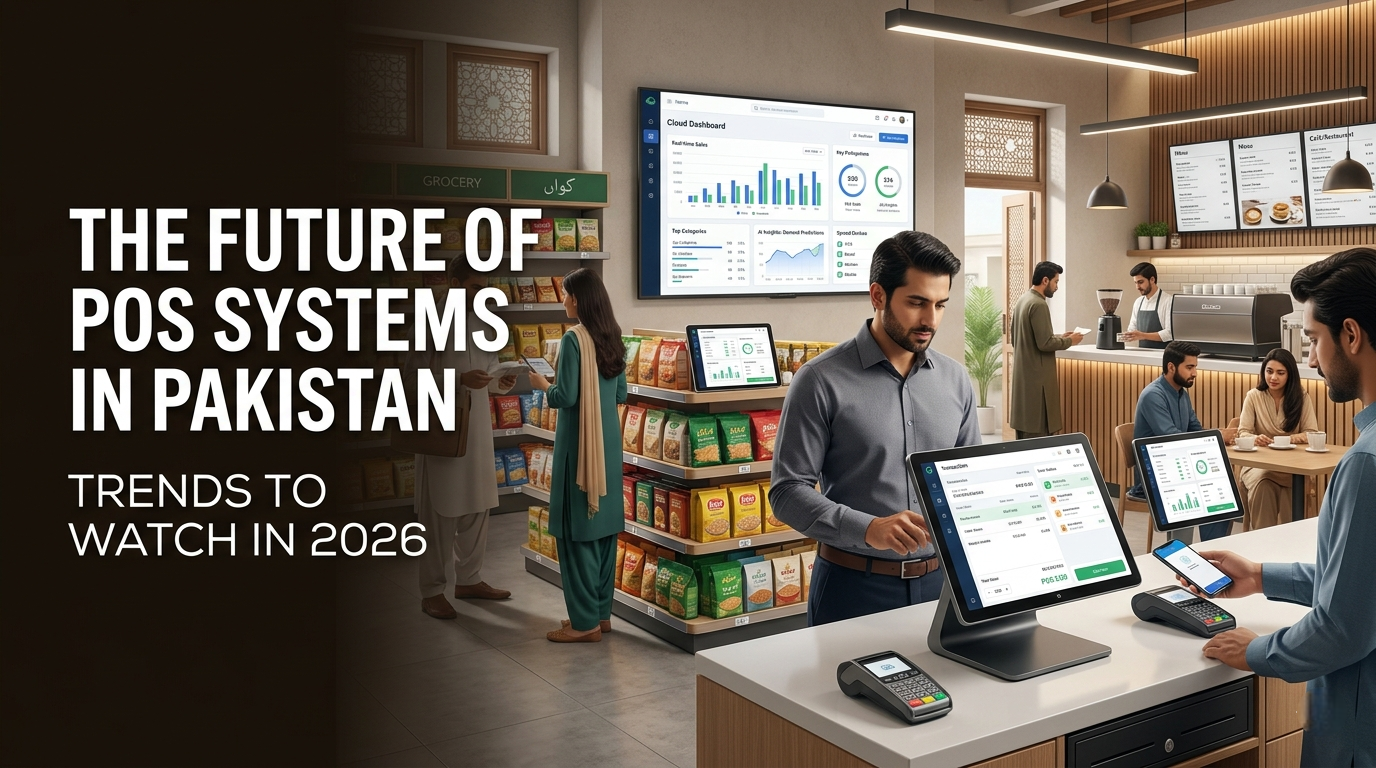
Introduction: Why POS Systems Are Changing Fast in Pakistan
If you run a shop, restaurant, or any retail business in Pakistan, you've probably noticed things are moving fast. The old cash register days are fading. Today's POS systems do much more than just print bills — they track inventory, manage customers, accept digital payments, and use business analytics dashboards to help you spot which products are selling before you run out. In 2026, the question isn't whether to upgrade, but how quickly you can adapt.
Current Problems with Traditional Billing Systems in Pakistan
Most small businesses in Pakistan still rely on manual billing or basic cash registers. Here's what that usually means:
- Inventory guesswork: You don't know what's selling until you physically check the shelves. By then, your best-selling item might already be out of stock.
- Cash handling errors: End-of-day counting mistakes are common. Rs. 500 or Rs. 1000 notes get mixed up, and nobody catches it until it's too late.
- No customer tracking: Regular customers come and go, but you have no record of what they buy or how often they visit.
- Payment limitations: Cash only means you lose customers who want to pay via card, JazzCash, Easypaisa, or QR codes.
- No branch visibility: If you have two or three shops, you have to physically visit each one to know how business is doing.
What Modern POS Systems Are Becoming in 2026
Today's POS systems are built for the way Pakistani businesses actually operate. They're not just fancy calculators — they're complete business management tools that work the way you work.
Cloud-connected: Your sales data lives online, not on a single machine. If your shop computer crashes, you don't lose your records. You can check today's sales from home on your phone.
Mobile-first: Handheld POS devices let you bill customers anywhere on the shop floor. No more queues at a fixed counter. Your waiter can take orders and print the bill right at the table.
Payment-agnostic: One system accepts cash, cards, mobile wallets, and QR payments. Your customer chooses how to pay; your POS handles it all in one transaction.
Analytics built-in: Simple dashboards show you what's selling, what's sitting on shelves, and which hours are your busiest. No accounting degree needed to read them.
Key Trends to Watch in 2026
- QR code payments everywhere: Raast and other QR systems are becoming as common as cash. A good POS in 2026 generates a unique QR for each bill, so payments are tracked and reconciled automatically.
- Offline-first design: Internet goes down often in Pakistan. Modern POS systems work offline and sync when the connection returns. Your business doesn't stop because the network is slow.
- WhatsApp integration: Send digital bills and receipts directly to customer WhatsApp numbers. No more lost paper receipts, and customers have a record they can actually find.
- Low-stock alerts: The system tells you when you're running low on fast-moving items. For a grocery store, this means you never run out of flour or cooking oil during peak hours.
- Multi-branch sync: If you have a chain of stores, see all sales in real-time from one dashboard. Move stock between branches based on actual demand, not guesswork.
- Affordable Android terminals: You don't need expensive Windows-based systems anymore. Android POS devices from brands like SUNMI cost a fraction of the price and do everything most small businesses need.
Benefits for Retailers and Restaurants: Real-World Outcomes
Here's what actually changes when you switch to a modern POS:
For a small clothing store in Lahore: You know exactly which sizes and colors are selling. When a customer asks for a size you don't have in stock, you can check your other branch inventory on the spot and arrange a transfer.
For a restaurant in Karachi: Orders go straight from the waiter's handheld device to the kitchen printer. No more lost order slips. Bills are split easily when a group wants to pay separately. Table turnover gets faster because billing takes seconds, not minutes.
For a grocery store in Islamabad: Expiry dates are tracked. The system alerts you before milk or bread goes bad. You reduce waste and protect your margins.
For any business owner: At the end of the day, you know exactly how much you made, by which payment method. No more surprise shortages. No more wondering if the cash in the drawer matches the day's sales.
Final Practical Takeaway: What Should You Do Next?
Don't try to find the perfect system. Look for one that solves your biggest pain point first. If you're losing track of inventory, prioritize stock management features. If customers complain about slow billing, focus on speed and mobile capabilities.
Start small. A single handheld Android POS terminal might be enough to test the waters. See how it works for a month. Train one or two staff members first. Once you see the benefits, you can expand.
Most importantly, choose hardware that's PTA-approved and comes with local support. A cheap imported device that breaks in six months with no warranty is more expensive than a quality system that lasts for years.
The future of POS in Pakistan isn't about fancy technology for its own sake. It's about tools that help you serve customers faster, reduce mistakes, and make better decisions — one bill at a time.
Ready to Modernize Your Business?
Explore our range of PTA-approved POS systems designed for Pakistani retailers and restaurants. Get expert guidance and after-sales support you can rely on.